If you are thinking about investing in Fredericksburg real estate, the biggest question is simple: does the opportunity outweigh the risk? That is a smart question to ask in a market that offers steady renter demand, a compact footprint, and multiple buyer profiles, but also tighter cash flow and more operational complexity than many first-time investors expect. In this guide, you will get a clear look at what makes Fredericksburg appealing, where the numbers get challenging, and how to think through your options with more confidence. Let’s dive in.
Why Fredericksburg draws investors
Fredericksburg offers something many investors want but cannot always find in one place: location, demand drivers, and a meaningful renter base. The city had 30,393 residents as of July 1, 2025, which is an 8.6% increase from 2020, according to U.S. Census QuickFacts. Its 2020 to 2024 ACS profile also shows a 39.7% owner-occupied rate, which points to a market with a large share of renters.
That renter-heavy profile matters. Fredericksburg is not simply a lower-cost version of nearby suburban counties. The Census profile for Fredericksburg shows a different tenure mix than Stafford County and Spotsylvania County, both of which have owner-occupancy rates around 80%.
For you as an investor, that means the city may support rental demand in ways the surrounding counties do not. It also means you need to underwrite Fredericksburg as its own market, not as an extension of the broader region.
What supports rental demand
Military and federal commuting access
Fredericksburg benefits from its position along the I-95 corridor and its connection to major employment centers. Marine Corps Base Quantico notes that the base is roughly 20 miles north of Fredericksburg, and its information for inbound households also references VRE shuttle access. That supports housing demand from service members, civilian workers, and households looking for a commute-friendly location.
Regional transit links
Commuter access is a major local advantage. The Fredericksburg Amtrak and VRE station is located at 425 Princess Anne Street, and VRE lists 644 free parking spaces at the station. The city’s planning materials have also identified 900 daily commuters departing from the Fredericksburg station on VRE.
That kind of infrastructure can make well-located rentals more attractive, especially for tenants who want access to Washington, D.C., Quantico, or other employment hubs along the corridor. In practical terms, proximity to transit, parking, and road access can matter just as much as square footage.
University-related demand
The University of Mary Washington reports total enrollment of more than 5,000 and operates a residential campus in Fredericksburg along with a second campus in nearby Stafford. That creates another layer of local housing demand from students, faculty, and staff.
While every property should be evaluated on its own merits, this kind of demand often supports interest in smaller homes, townhomes, and rentals near campus routes or central city locations. The city’s own clean transit page also notes that Fredericksburg has a large rental population, which reinforces the broader housing mix.
What the numbers suggest today
On paper, Fredericksburg can look promising. In practice, the math often requires discipline.
Redfin’s market tracker reports a February 2026 median sale price of $539,990, 73 median days on market, and a 98.8% sale-to-list ratio, calling the market somewhat competitive. Realtor.com’s Fredericksburg overview reports a similar $539.9K median sale price, along with a $2,250 median rent, 663 homes for sale, 258 rentals, and a balanced market.
The main takeaway is not that one platform is right and the other is wrong. It is that you should rely on neighborhood comps and property-specific underwriting rather than any single citywide snapshot.
Cash flow is possible, but not easy
Fredericksburg is not an obvious median-price cash-flow market. Using Census medians, a $1,619 median gross rent against a $483,700 median owner value implies a rough gross yield of about 4.0% before vacancy, repairs, taxes, insurance, and financing. Using current Realtor.com medians, $2,250 monthly rent against a $539,990 sale price implies a gross yield of roughly 5.0%.
Those are top-line numbers only, but they help frame expectations. Gross yield is not the same as net cash flow, and Fredericksburg’s current financing environment can tighten the picture quickly.
According to Freddie Mac, the 30-year fixed rate was 6.37% on April 9, 2026. Based on the research provided, an 80% loan-to-value loan on the current median sale price would produce estimated principal and interest of about $2,694 per month, while Fredericksburg’s FY 2026 real estate and fire tax adds about $326 per month on a median-value property. That places estimated principal, interest, and city property tax at around $3,020 per month before insurance, repairs, HOA dues, and management.
If you are a first-time investor, that is the point to slow down. At median pricing and standard leverage, many long-term rentals may not pencil out without a lower purchase price, a larger down payment, or a value-add strategy that can support higher rents.
Micro-location matters more than averages
One of the biggest mistakes investors make is underwriting a property based on a city average. Fredericksburg has enough rent variation by area to make that approach risky.
Realtor.com’s neighborhood overview shows median rents of about $1,695 on Lafayette Boulevard to South Route 1, $1,795 in Downtown Fredericksburg, about $2,025 in the Historic Downtown District, and $2,700 on Plank Road to Route 3. That spread is meaningful.
For you, this means the investment story often changes block by block or corridor by corridor. A property that struggles at one rent level may perform much better in a stronger micro-market, while an over-improved purchase in the wrong location can erase your margin quickly.
Historic homes offer upside and added complexity
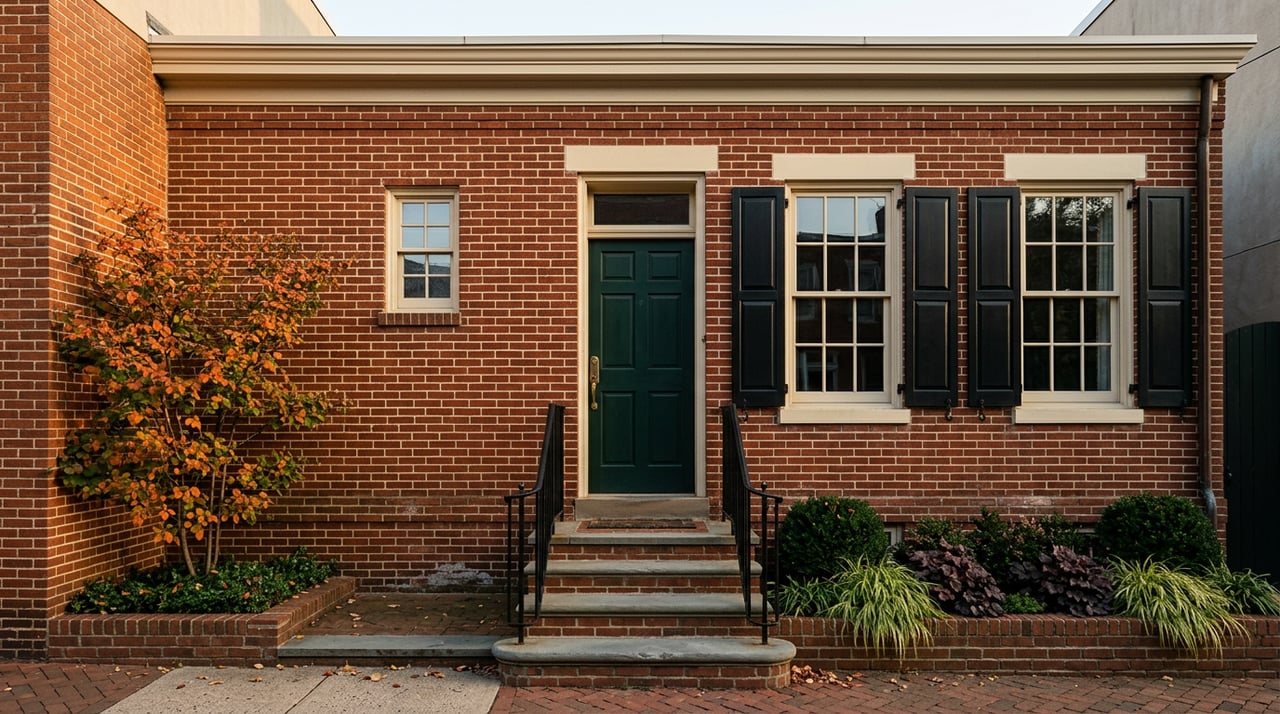
Fredericksburg’s historic character is part of its appeal, but it also creates a different risk profile. The city’s Historic District page explains that the district covers hundreds of buildings in the downtown core, and many exterior changes require an Architectural Review Board certificate of appropriateness.
For investors, that can be both a benefit and a constraint. Historic housing can offer charm, location, and renovation upside, but approval timelines and project scope can affect your budget and timeline.
There is also a potential tax advantage. The city’s Rehabilitation Tax Credit program offers a partial exemption from the increase in real estate tax for qualifying residential rehab in the Historic District. However, the application and inspection must happen before any work or interior demolition begins.
If you are considering an older property, there is another fact you need to weigh carefully. Fredericksburg’s lead-based paint hazard page states that 6,262 of the city’s 8,888 dwelling units were built before 1978. That raises the likelihood of lead-related remediation, hidden repairs, and longer rehab timelines.
Newer product may be simpler, but supply is tight
If your goal is lower maintenance and fewer renovation surprises, newer or more recently updated properties may feel safer. The challenge is that Fredericksburg itself is a compact city of 10.45 square miles, and it recorded just 37 building permits in 2024, based on the Census and research provided.
That points to a more supply-constrained environment inside the city. Limited new inventory can help support values, but it can also make it harder to find easy, low-maintenance investment opportunities at a price that works.
For some investors, this means balancing the trade-off between older in-city stock with value-add potential and simpler, lower-maintenance options elsewhere in the surrounding corridor. The right fit depends on your time horizon, renovation experience, and tolerance for project complexity.
Operational risks to factor in
Landlord licensing
Fredericksburg requires a landlord business license for anyone renting real property in the city. The fee is $25 plus $0.16 per $100 of gross rental receipts over $50,000, and landlords must submit tenant lists annually.
The direct cost is modest, but the administrative step is important. If you are building your first rental or scaling a small portfolio, process and compliance should be part of your underwriting.
Short-term rental rules
If you are considering an Airbnb-style strategy, local rules matter. Fredericksburg’s short-term rental tax page defines a short-term rental business as one where at least 80% of gross rental receipts come from stays of 92 consecutive days or less, and the city requires registration plus a 1% short-term rental tax.
That does not mean short-term rentals cannot work. It does mean you should verify the rules and tax treatment before assuming that projected income is realistic.
Property maintenance enforcement
The city also actively enforces its property maintenance code. Fredericksburg says notice of violation is issued after complaint and field verification, owners are generally given 10 to 30 days to correct violations, and permits may be required before corrective work.
That is especially relevant if you are buying older housing stock. A property that seems like a cosmetic refresh on day one can become more compliance-heavy once work begins.
Best opportunities for cautious investors
Fredericksburg may offer the best fit if you are looking at one of these strategies:
- Below-median acquisitions where you create a margin at purchase
- Moderate value-add renovations rather than deep, fast-turn rehabs
- Well-located long-term rentals near transit, campus routes, or commuter corridors
- Historic properties with a clear renovation plan and full awareness of review requirements
- Professionally supported rentals where local management and preventive maintenance reduce operational risk
In other words, the stronger plays are often the ones built on discipline, not optimism. Buying right matters more here than buying fast.
A balanced investor takeaway
Fredericksburg has real strengths: population growth, transit access, military and university demand, and a renter-heavy housing mix. Those factors can support long-term investment interest and make the city worth a serious look.
At the same time, this is not a market where median-price rentals automatically produce attractive cash flow under standard financing. Older housing stock, historic review, local licensing, maintenance enforcement, and tighter margins all raise the importance of careful due diligence.
If you are evaluating Fredericksburg as part of your Northern Virginia investment strategy, the goal is not to avoid the market. The goal is to enter it with realistic numbers, a clear plan, and the right local guidance. If you want help identifying investment opportunities, evaluating risk, or planning a purchase strategy in Fredericksburg and the surrounding region, connect with Cheryl L. Folmer for a confidential consultation.
FAQs
Is Fredericksburg, VA a good place to buy rental property?
- Fredericksburg can offer solid rental demand because of its renter-heavy housing mix, commuter access, military proximity, and university presence, but many median-price properties may not cash flow easily under standard financing.
What are the biggest risks of investing in Fredericksburg real estate?
- The main risks include tight cash flow, older housing stock, possible lead-related issues, historic district approval requirements, landlord licensing, and active property maintenance enforcement.
How does the Fredericksburg rental market compare by area?
- Rents vary meaningfully by micro-location, with reported neighborhood medians ranging from about $1,695 to $2,700, so property-specific comps are more useful than citywide averages.
Do Fredericksburg landlords need a business license?
- Yes, the city requires landlords renting real property to obtain a landlord business license and submit tenant lists annually.
Are historic homes in Fredericksburg good investment opportunities?
- They can be, especially if you value location and renovation upside, but you should factor in Architectural Review Board requirements, older-home repair risk, and the need to apply early if pursuing the city’s rehabilitation tax credit.
Can short-term rentals work in Fredericksburg, VA?
- They may, but the city requires registration and applies a 1% short-term rental tax for qualifying short-term rental businesses, so you should verify local rules before underwriting projected income.