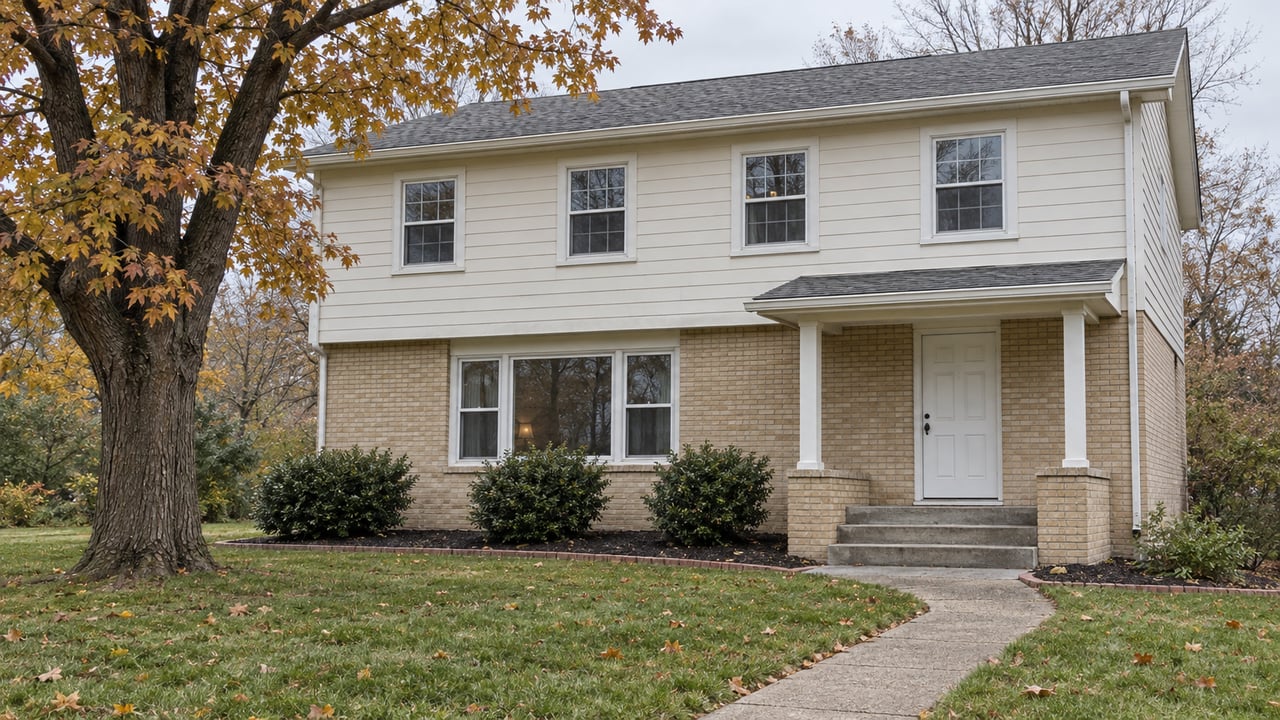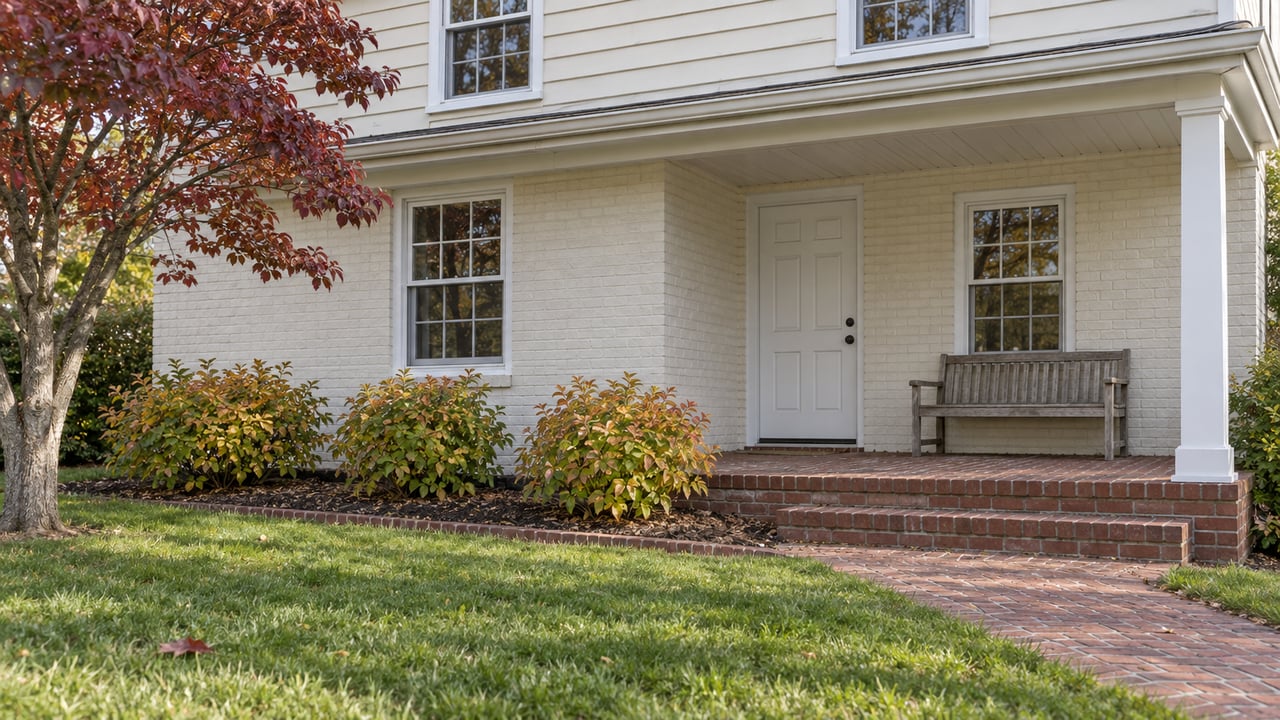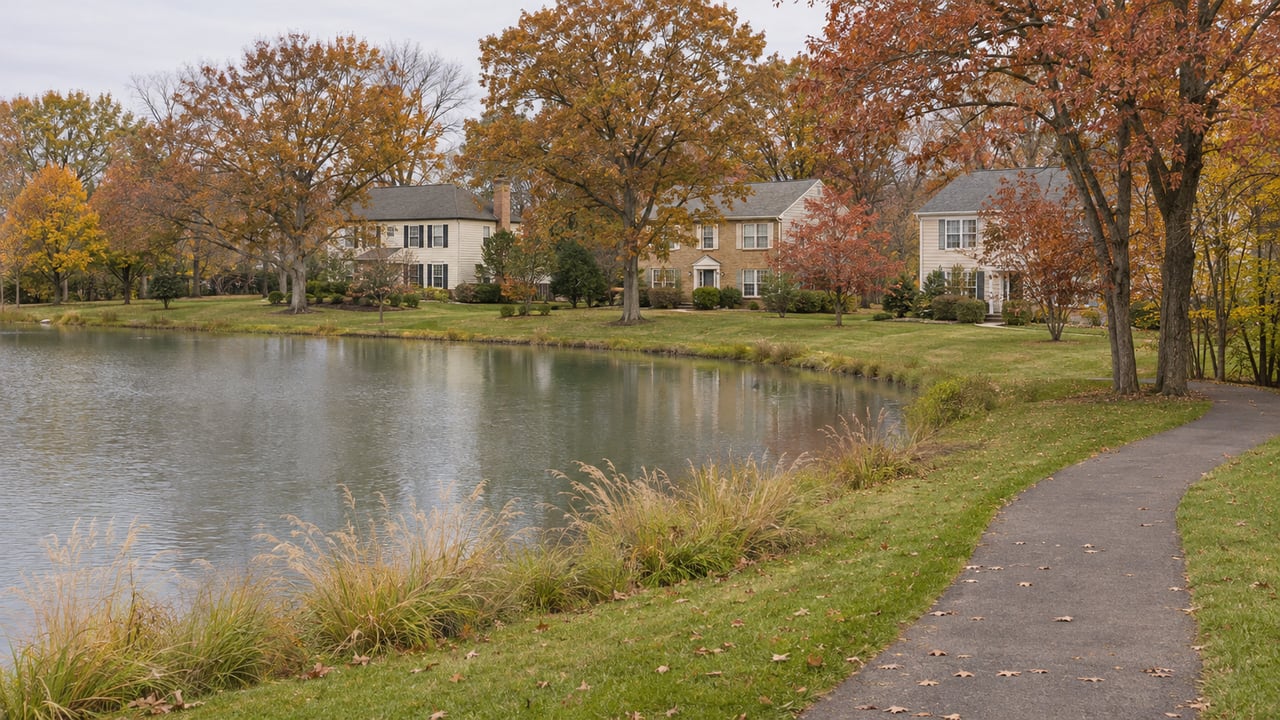
For tax year 2026, Loudoun County left its real property tax rate at $0.805 per $100 of assessed value. The average homeowner's bill still went up $141. According to the county's FY2027 budget revenue chapter, the average bill on a home that already existed went from $6,280 in 2025 to $6,421 in 2026, partly because home values rose.
Buyers comparing counties usually compare the rate, but you pay the bill, and the bill is the rate times your assessment. In Loudoun, a third number sits behind both of them. Roughly 45 cents of every local tax dollar now comes from data centers. The county has also said in writing that this revenue will plateau within the next decade.
The Rate Has Fallen for a Decade While Assessments Climbed
WUSA9 reported that Loudoun's real property rate has dropped almost every year for a decade, from $1.145 per $100 in 2016 to $0.805 today. The county calls that the lowest rate in Northern Virginia. The county's own rate table shows the most recent stretch:
| Tax year | Real property rate per $100 | Average 2026 bill at that rate* |
|---|---|---|
| 2016 | $1.145 | about $9,130 |
| 2022 | $0.890 | about $7,100 |
| 2023 | $0.875 | about $6,980 |
| 2024 | $0.865 | about $6,900 |
| 2025 | $0.805 | about $6,421 |
| 2026 | $0.805 | $6,421 |
*The last column is simple arithmetic. It applies each historical rate to the same average 2026 assessment behind the county's $6,421 figure. It is not a county projection.
On that average home, each cent of rate is worth about $80 a year. Had the rate stayed at its 2022 level, the 2026 bill on the same home would be roughly $680 higher. Since a mortgage payment usually includes escrowed taxes, that gap shows up in the monthly payment and in the debt-to-income math a lender runs.
Spending has kept growing during those cuts. In April 2026 the adopted FY2027 budget fully funded the School Board's $105 million increase, for a $2.1 billion operating budget. Commercial taxpayers made up the difference, and one kind of commercial taxpayer above all.
Computer Equipment Carries Nearly Half the Load
The county's FY2027 budget splits data center revenue into two lines. About $417.7 million comes from real property tax on data center buildings and land, and about $879.1 million comes from the tax on computer equipment inside them. Together that is close to $1.3 billion. The Loudoun Times-Mirror puts data centers at 45% of FY2027 local tax revenue. WUSA9's figure is about 46%.
The equipment line explains the whole story. Data center equipment falls under the general personal property rate of $4.15 per $100, and the county kept that rate the same for 2026 and 2027. The revenue has still grown fast:
- FY2023 actual: $581.6 million
- FY2024: $684.8 million
- FY2025: $699.8 million
- FY2026 adopted: $794.8 million
- FY2027 budgeted: $879.1 million
With the rate fixed, all of that growth comes from more taxable equipment going into more buildings, as WUSA9 put it. The county permitted about 10 million square feet of new data center space in 2025 alone. The growth that has let the homeowner rate fall depends on new construction continuing. As that construction slows, the line levels off.
The County Has Already Put a Date on the Plateau
Loudoun's leadership says this openly. When County Administrator Tim Hemstreet presented the FY2027 proposal on February 11, 2026, the county described it as constraining budget growth "in anticipation of a plateauing of revenues in the early 2030s." According to WUSA9, the county's budget guidance states that data center revenue "will plateau in the next 5 to 10 years." The same guidance says the Board will need to consider raising tax rates if spending growth isn't brought under control by then.
The Board has started planning for that point:
- Growth caps. Loudoun Now reported that supervisors capped budget growth at 9% for county operations and 8% for schools. Revenue above the caps goes to capital projects and housing.
- A glide path. Supervisor Juli Briskman told the Loudoun Times-Mirror that the county plans to bring county and school budget growth down to 5% by FY2032. Excess data center revenue will go to county projects and housing in the meantime.
- A reserve. Supervisors created a Revenue Stabilization Fund in October 2023 to absorb a slowdown in data center revenue, with a target of 10% of that revenue. It holds $119.7 million, and the FY2027 budget added nothing to it.
For a buyer, the timing matters. A family buying in 2026 with a ten-year horizon will still own the house when the county expects the plateau. Today's $0.805 rate is real, but the county's own planning treats it as one point in a cycle, and nobody has promised it will last.
The Same Industry Is Now Meeting the Neighborhoods
If data center revenue funds the low rate, more data centers would seem to protect it. Supervisors are weighing that tradeoff now, because new facilities and the power lines that serve them are getting closer to homes.
Loudoun has already ended new by-right data center development, so new projects need Board approval through a special exception. On September 15, 2026, the Board voted to consider pausing its action on legislative applications for data centers and electrical substations for up to 12 months, the maximum Virginia law allows. The vote followed a County Attorney opinion that an outright moratorium on data center approvals would not be legal. The resolution was deferred from October 20 to the Board's November 17 meeting. Under the proposal, applications could still move through Planning Commission review, and administrative applications would not be affected. The pause is meant to give the county time to finish rewriting its data center standards and locations, which the county expects to complete in summer 2027.
WUSA9 described what a pause would cost. Existing data centers keep paying and approved projects keep moving, so the loss is in what doesn't get built. Two current cases show the other side of that tradeoff.
Brambleton. The Loudoun Times-Mirror reported on STACK's Shreveport South plan near Evergreen Mills and Belmont Ridge roads. It calls for two three-story buildings totaling about 1.3 million square feet, with 114 backup generators, about 265 feet from the nearest home. The data center use is by-right. The NOVEC-Deimos substation that would serve it needs Board review, and the paper placed it about 250 feet from homes and a daycare. An October 27 community meeting at Legacy Elementary drew at least 165 people. The paper also reported mitigations under discussion: a lower-profile substation design, screening, landscaping, an underground grid connection and sound testing.
Loudoun Valley Estates. In a June 29, 2026 final order, the State Corporation Commission chose overhead Route 3A for Dominion's Golden-to-Mars transmission line near Loudoun Valley Estates. An April order had already found burying the line impractical at that location. Loudoun Now reported that the County, Loudoun County Public Schools and the Loudoun Valley Estates HOA appealed to the Supreme Court of Virginia, challenging both the route and the rejection of undergrounding.
The countywide tax rate and the power line behind a particular backyard come from the same revenue stream. Data center construction pays for the low rate, and its effects land on specific streets, so the house you choose decides how much of each you get.
What to Ask About a Specific Loudoun Address
Since the rate is shared countywide and the trade-offs land on specific streets, the useful questions are about the parcel:
- What is the current assessment, and how has it moved? In 2026 the bill rose with a flat rate, so the assessment trend tells you more about next year's bill than the rate does.
- Is there a pending data center or substation application nearby? The county's data center standards page tracks the rewrite, and Board meeting documents are posted at loudoun.gov/meetings at least three days before each meeting.
- Is a transmission route approved or under appeal near the property? For Golden-to-Mars, the SCC has picked a route, and the Supreme Court appeal is still open.
- How many vehicles will the household register? The vehicle personal property rate falls to $3.09 for tax year 2026, with $2.94 planned for 2027. The county says that cuts the bill on a $30,000 vehicle by $352 in 2026, and that for most households with vehicles the savings more than offset the $141 rise on the home.
This post is general information, not tax, legal or financial advice. Please confirm the figures for your own property and situation with the county and the right professional.
A Few Direct Answers
Did Loudoun raise property taxes for 2026? The rate stayed at $0.805 per $100. The average bill on an existing home still rose $141, to $6,421, largely because assessments went up.
Would a data center pause change the tax rate? Existing data centers would keep paying. A pause would slow the new construction that has driven revenue growth, and the county already expects that growth to level off in the early 2030s.
When does the data center zoning rewrite finish? The county expects the Comprehensive Plan and Zoning Ordinance amendments to wrap up in summer 2027.
If you're weighing a Loudoun address against homes elsewhere in Northern Virginia, LifeStyle via Real Estate can go over the tax picture, the nearby data center applications and the transmission routes for each property on your list. Schedule a Consultation to talk it through with Cheryl.